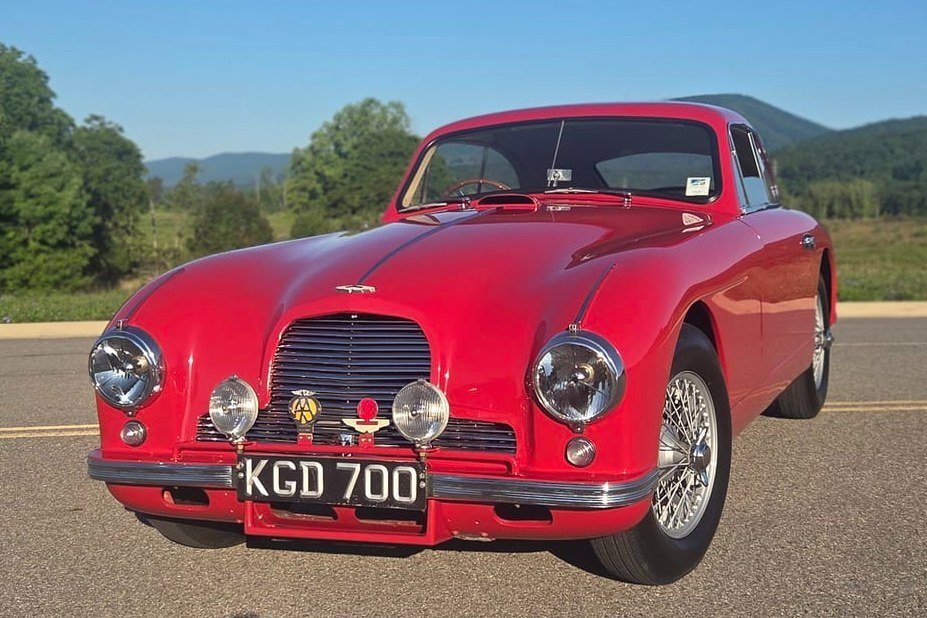
COMING SOON 1952 Aston Martin DB2
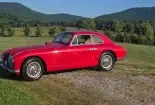
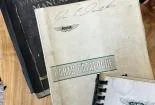
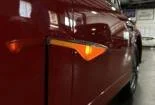
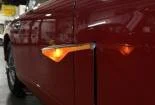
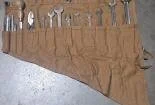
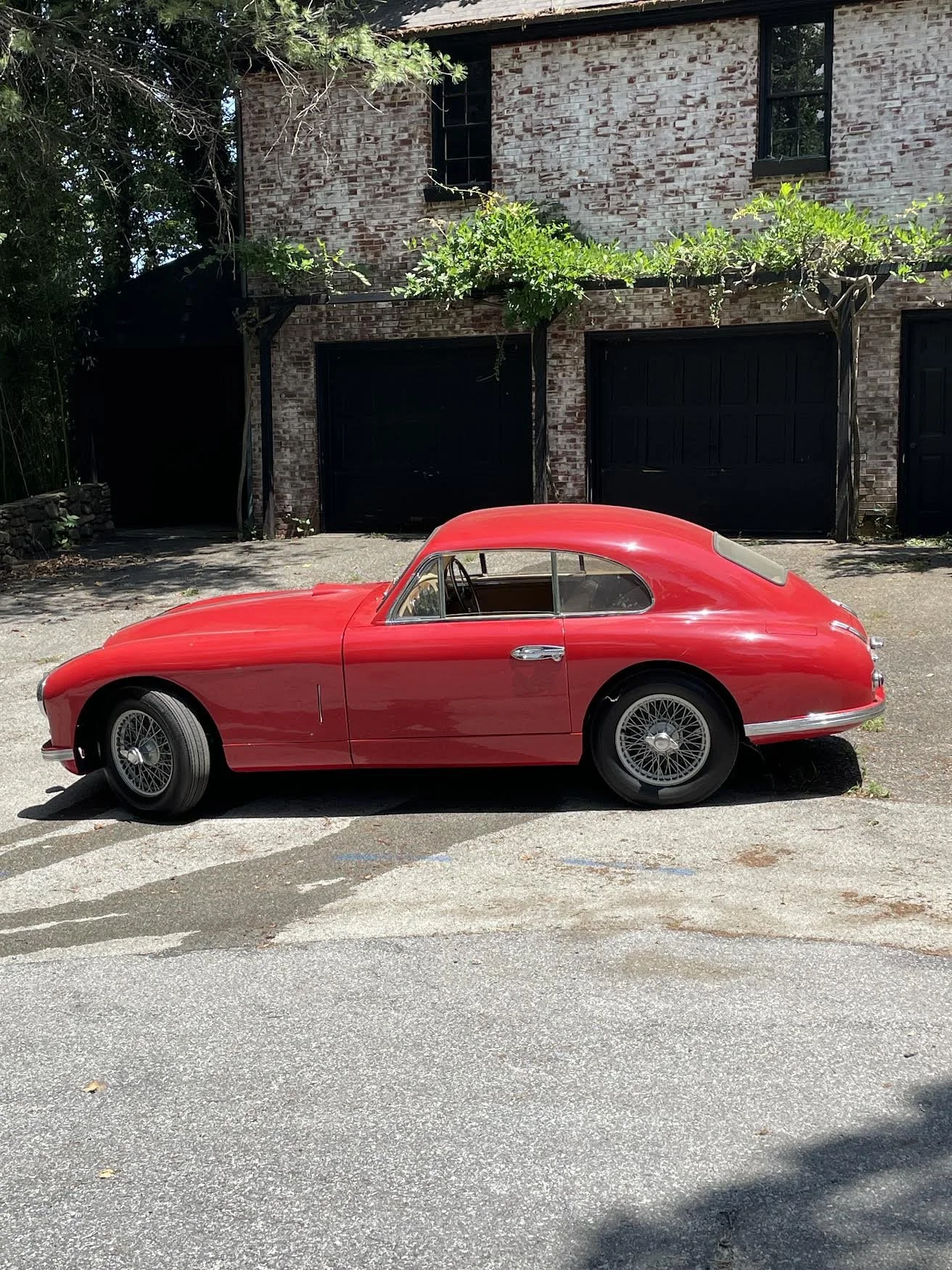
Is one of approximately 300 saloons manufactured during three years of production, and it was delivered to its first owner in Ayrshire, Scotland, on August 1, 1952, before its replacement 2,580cc Lagonda inline-six was converted to Vantage specification a year later. The car remained in the United Kingdom until approximately 1978, when it was titled in Virginia, and it was later acquired by the owner’s family member in 1985. Later that decade, the aluminum body was repainted red, and the cabin was re-trimmed in tan leather. Shifting is through a four-speed manual transmission, and the car rides on an independent front suspension and 16″ wire-spoke wheels over hydraulic drum brakes. Further elements include a side-exit exhaust system, “Trico” horns, Lucas headlights, driving lamps, and a wood-rimmed steering wheel. This DB2 is now offered by the seller on behalf of the late owner’s estate with a copy of the build sheet, a folder of historical ownership documents and other records, a tool kit, manufacturer’s literature, and a Virginia title in the name of the late owner’s trust.
The DB2 was designed in the wake of David Brown’s purchase of Aston Martin and Lagonda and debuted at the 1950 New York Auto Show. Based on a shortened version of the Claude Hill-designed steel-tube frame from the 2-Litre Sports, the model wore Frank Feeley-penned fixed-roof aluminum bodywork that was later joined by a drophead variant. Styling elements include a forward-hinged hood, a sloping rear roofline, and a single-piece grille that was introduced after the first 49 cars were assembled.
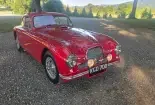
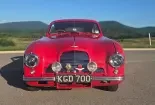
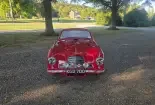
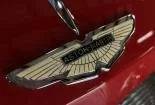
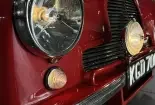
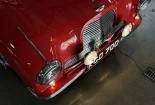
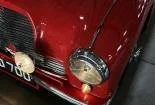
Originally finished in Blue Haze, this example was refinished in red following the replacement of the lower front fascia, rocker panels, and rear wheel wells in 1988. Lucas tri-bar headlights are fitted, and driving lamps and grille badges are affixed to a bar mounted on the front bumper. The factory service log indicates accident repairs were performed in the 1950s. Paint chips and an area of missing finish on the underside of the front fascia are noted.
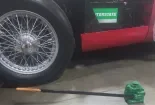
The refinished wire-spoke wheels are secured with two-eared spinners and mounted with 6.00-16 Avon tires that should be replaced due to age. A spare is secured inside the rear compartment. The coil-spring suspension utilizes an independent front setup with a torsion bar and trailing arms, while the solid rear axle is located by a Panhard rod and radius arms. Stopping is handled by Girling hydraulic brakes with 12″ drums at each corner.
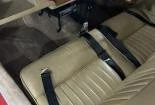
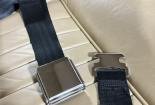
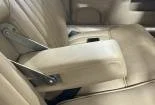
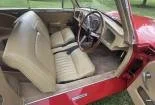
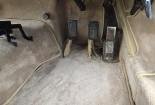
The front bucket seats were re-trimmed in tan leather, and the seat frames were refurbished circa 1988. Color-coordinated upholstery extends throughout the right-hand-drive cabin, which has a rear parcel shelf, lap belts, and dual dashboard cubbies. The aftermarket radio is inoperative.
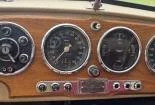
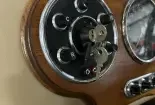
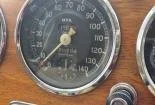
The wood-rimmed steering wheel features three bright spokes. The centrally mounted wood instrument cluster surround has been refurbished along with the Smiths readouts, which include a 140-mph speedometer with an inset clock, a reverse-sweep tachometer, and a combination gauge for amperage, oil pressure, fuel level, and coolant temperature. The five-digit odometer shows 1k miles. Higher mileage readings are shown on various documents in the gallery, and the Virginia title lists an Odometer Brand of “Not Actual.” Total mileage is unknown.
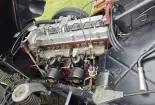
The 2,580cc Lagonda inline-six features dual overhead camshafts, a hemispherical combustion chamber, and twin SU carburetors. According to factory service notes, the engine was replaced in September 1952 and converted in March 1953 to high-compression Vantage specification, which added revised valve timing and larger-choke carburetors. An engine rebuild was performed circa 1983, and service in June 2026 included changing the oil and coolant and replacing the battery. “Trico” horns were installed in 1952, and a side-exit exhaust system with glasspack mufflers and dual outlets was added in 2015.
Priced accordingly $155,900